
Craps has a reputation for being one of the most daunting casino games, mainly because its vocabulary resembles shorthand from a backroom dice game https://totalcasino.biz.pl/. I would watch shooters roll while dealers shouted terms I could not identify. Once I mastered the language, the game became far more enjoyable and easier to follow at Total Casino. In this guide, I describe the common craps terms you will see on digital layouts, live dealer tables, and strategy guides. I concentrate on terms that truly influence betting decisions, not just decorative slang, so you can transition from confused observer to informed player.
Craps Table Terms: The Essentials
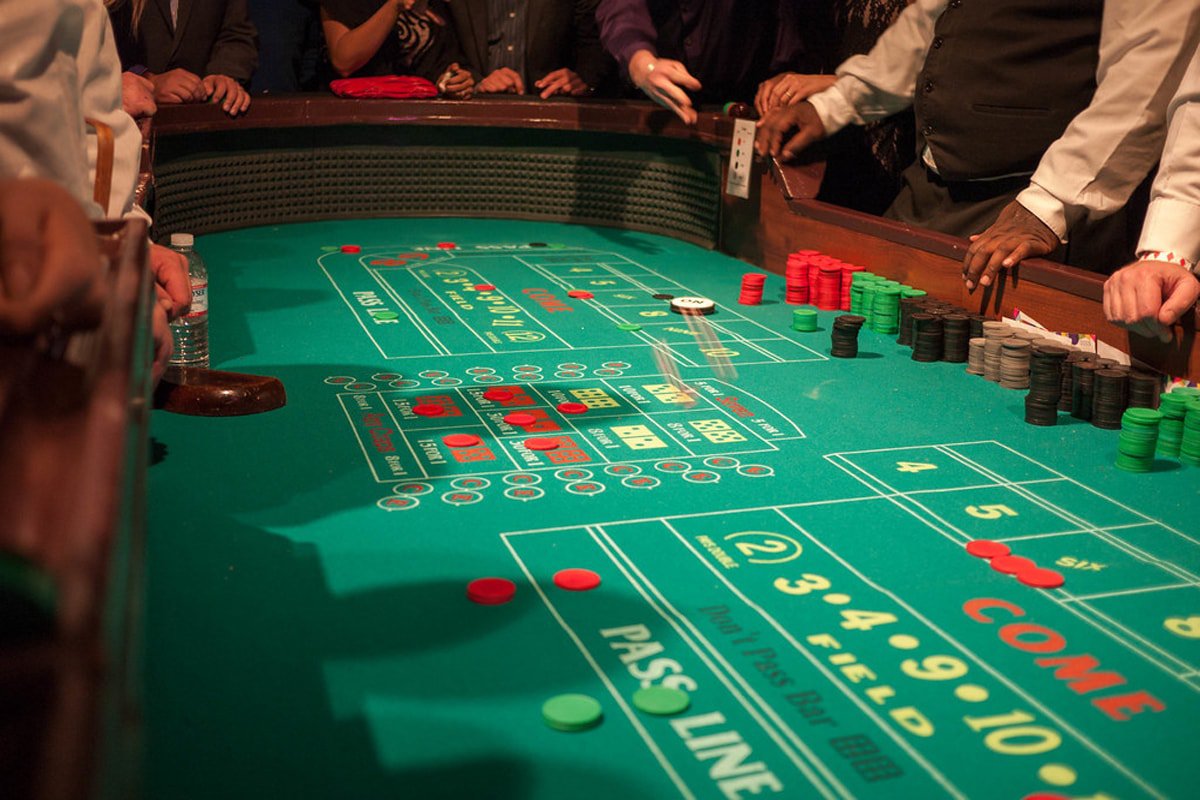
I usually begin with the table because most craps terms are tied to a specific area on the felt. The shooter throws the dice, the stickman pushes them with a lengthy stick, and the boxman oversees the game. The layout features the pass line, don’t pass bar, come area, field, and place bet zones. These labels are mirrored in online craps interfaces, including the one I use at Total Casino. When I log in, I seek out those recognizable markers on the digital table before putting down any stake.
The puck is a compact disc that signals the point. I watch for ON or OFF. On the come-out roll the puck is off, signifying no point is set. Once a point is determined, the puck moves to that number and switches to ON. An OFF puck doesn’t signify a pass line bet is dead; it simply signals a new sequence. Online, the software spotlights the puck and displays the same language in text, which assists when I take part in a speedy round at Total Casino.
How Online Craps Works at Total Casino
When I intend to play craps at Total Casino, I go to the table games or live casino section and look for a craps offering. The broader selection usually contains slots, live dealer games, and other table games, but craps often includes its own filter. The digital layout replicates the felt, with buttons for chip sizes, bet zones, and roll controls. Some versions are RNG-based, while others are live dealer games. Each format employs the same terms I have described, but the pace is varied.
- Log in to Total Casino or register an account.
- Check the cashier for deposit options and load funds.
- Open the craps game and let the interface load.
- Select a chip denomination and select the pass line or don’t pass area to make a bet.
- View the roll result and decide whether to add odds or new come bets.
The main difference online is that the software stops many mistakes. I am unable to place a late bet on a locked roll, and the system computes payouts automatically. That is beneficial when I am still studying terms like lay odds or hardway combinations. I still recommend checking the game rules before playing because table limits can differ. Total Casino usually displays those details inside the game menu, so I review them before betting real money on any session.
Odds Side Bets and the Vocabulary of House Advantage
True Odds vs. Payout Odds
An odds side bet is an extra bet in support of a pass line bet, don’t pass, come, or don’t come bet when the point number is established. It pays out at true odds, meaning the house has zero built-in edge on that part. The point dictates the payoff: point 4 or 10 pays out 2:1, point 5 or 9 pays 3:2, and point 6 or 8 rewards 6:5. Since the house edge is zero on this portion, taking the odds reduces the combined edge I deal with.
- 4 or 10: real odds payoff 2:1
- 5 or 9: true odds payoff 3:2
- 6 or 8: real odds payment 6:5
- House edge: 0% on odds, but the original bet must carry its own commission
Place side bets and buy wagers have their own vocabulary. A place bet on 6 or 8 rewards 7:6, while a place wager on 5 or 9 pays out 7:5 and 4 or 10 pays out 9:5. These payments are somewhat less than true odds since the gambling establishment charges a built-in charge referred to as the vigorish. I separate words into two sets: side bets with low house edges and bets that produce rapid play. That differentiation aids me choose if a phrase is relevant to lengthy sessions at Total Casino or merely a loud proposition bet.
Proposition Wagers: Single-Roll and Hard Way Definitions
Proposition bets represent the quick-paced wagers in the middle of the table, and I treat them as entertainment. A one-roll bet is resolved on the next roll. Instances include any seven, any craps, and the horn bet. Any seven succeeds if the next roll is a 7, any craps succeeds on 2, 3, or 12, and a horn bet is split between 2, 3, 11, and 12. These bets often carry a high house edge, occasionally above 10 percent, so I hold the amounts small.
- Field bet: one-roll wager on 2, 3, 4, 9, 10, 11, or 12; payout odds differ by table.
- Hardway bet: pays only when a number is rolled as a pair: hard 4 is 2-2, hard 6 is 3-3, hard 8 is 4-4, hard 10 is 5-5.
- Big 6 and Big 8: a bet that 6 or 8 rolls before 7; simpler to use than a place bet but typically pays less.
- Crap numbers: 2, 3, and 12 on the come-out roll; “craps” points to losing totals for a pass line bet.
Hardway terms confuse newer players because a hard 8 is not the same as an easy 8. An easy number comes up with another combination, such as 5-3 for an 8. Hardway bets remain active until they win or a 7 or the same number in easy form occurs. I find these terms useful when listening to dealer calls at a live Total Casino table. The software marks bet spots, but knowing the words stops me from accidentally placing a high-variance wager.
Come and Don’t Come Wagers: The Roll Progression
Come Plays
Once a point is set, I can make a come bet on the following roll. It functions like a pass line bet after the come-out roll. A come bet pays if the next roll is 7 or 11 and is defeated on 2, 3, or 12. If another number appears, the come bet travels to that number and wins if it repeats before a 7. This enables me to scatter action across various numbers instead of holding out only for the first point. Total Casino shows the come bet marker distinctly when I employ the digital bet spot.
Don’t Come Plays
A don’t come bet is the delayed opposite of a come bet. It pays on 2 or 3 after the bet, loses on 7 or 11, and is a push on 12. If a point number comes up, the bet moves behind that number and pays if a 7 shows up before the number. I think of it as a way to take the don’t side mid-roll without betting against the shooter on the first line. Once I understood the term, I stopped mixing up it with a late don’t pass bet.
Dice Sequence and Dealer Calls You May Encounter
Craps uses a defined order: come-out roll, point, then repeated rolls until the point or a 7. A come-out roll commences when the puck is off. If the shooter gets 4, 5, 6, 8, 9, or 10, that turns into the point and the puck moves to that number. The shooter keeps rolling until the point comes again or a 7 shows up. When a 7 ends the round, the call is “seven out”, and the dice move to the next shooter. I follow this sequence to plan my bets.
- Yo-leven: dealer call for 11, employed to avoid confusion with seven.
- Off and on: tells the crew whether place and prop bets are working on the come-out roll.
- No action: bet is not in play, typically because the dealer did not record it before the roll.
- Same dice: shooter prefers to hold onto the same two dice after they exit the table.
- Crap check: a dealer note that a 2, 3, or 12 may influence the pass line and don’t pass bets.
I focus on “working” and “off” because they change how one-roll bets perform. If I inform the dealer my place bets are working, they can win or lose on a come-out roll. By default, many of those bets are off unless I say otherwise. Online craps at Total Casino handles much of this automatically, but live dealer games still rely on verbal calls. Knowing them means I can follow a fast game without having to ask the dealer to reiterate every decision.
Pass Line and Don’t Bet: The Primary Bets
The pass line is the opening bet I mastered, and it continues to be the backbone of craps. You place it before the come-out roll. On that roll, a 7 or 11 collects even money, while a 2, 3, or 12 is a loss. If any other number appears, that number becomes the point. The pass line then succeeds if the point comes again before a 7. This is not a single-roll wager; it remains in play until it pays or loses. At Total Casino, the software lets me click the pass line zone to confirm the wager.
The don’t pass bet is the reverse side. On the come-out roll, a 7 or 11 fails, while a 2 or 3 wins. A 12 is often a standoff, which is why the layout says “Bar 12”. If a point is established, the don’t pass succeeds if a 7 comes up before the point. The house edge is a bit smaller than the pass line, but some players steer clear of it because it succeeds when others come up short. Both bets are common in Total Casino’s craps offering.
Rewards, Banking, Safety, and Mobile Play at Total Casino
Offer Rules and Playthrough
The majority of casino promotions at Total Casino fall into familiar categories: deposit match bonuses, free spins, cashback, reload offers, and loyalty rewards. A craps player must always read the terms because table games often contribute less toward wagering requirements than slots. If craps is excluded or accounts for only a small percentage, a bonus might be a poor fit. I check the promotion page for the current offer and the exact wagering multiplier. No fixed figure is relevant to every campaign, so I never depend on memory.
Deposits, Payouts, and Platform Support
The cashier at Total Casino usually shows payment methods such as cards, e-wallets, bank transfers, and prepaid vouchers. Deposits are usually instant, while withdrawal times vary by the method. E-wallets often process within a day, cards may require several business days, and bank transfers can be the slowest. These are common timeframes, not guarantees. The site works through mobile browsers, so I can play craps on a phone or tablet. I also search for licence details in the footer and look for SSL encryption, because a regulated platform must make security and responsible gambling tools visible.
Craps no longer feels like a foreign language once you distinguish the core betting terms from the high-variance prop bets. I advise starting with the pass line and odds, then adding come bets only when the flow makes sense. At Total Casino, the online interface makes those bets easy to find, but the terminology still matters. Before you deposit, look at the current bonus rules and payment options so there are no surprises. If you understand one thing, remember this: the come-out roll, point, and seven-out sequence provides structure to everything else on the table.
Common Questions
How does the pass line in craps?
The pass line is a flat wager placed ahead of the come-out roll. You win on 7 or 11 and fail with 2, 3, or 12. If a different number shows up, that number is set as the point. The bet then succeeds if the point repeats before a 7. It is one of the lowest-house-edge wagers and the foundation for most systems.
What is meant by the come-out roll? wyselekcjonowana lista
The come-out roll is the first roll of a new betting round, while the puck is off. It determines whether a point is set. On this roll, pass line bets win with 7 or 11 and fail on 2, 3, or 12. Any other number turns into the point, progressing the round. I always watch this roll because it determines the table’s next sequence.
What does “seven out”?
“Seven out” is the announcement from the dealer when a 7 is rolled before the point is repeated, concluding the round. For pass line and come bets, it means a loss. Don’t pass and don’t come bets succeed. The dice pass to the next shooter, and a new come-out roll starts. Identifying this call allows me close out my bets and prepare for the next sequence.
What is the hardway bet?
A hardway bet wins when a number is rolled as a pair ahead of a 7 or before the same total shows up in any other combination. Hard 4 is 2-2, hard 6 is 3-3, hard 8 is 4-4, hard 10 is 5-5. If the shooter rolls an easy version of that number, the bet is defeated. These bets carry a higher house edge, so I employ them sparingly for additional excitement.
How does exactly odds bet work?
An odds bet is an extra bet behind a pass line, don’t pass, come, or don’t come bet after a point is established. It pays at true odds with a zero house edge. The payout depends on the point: 4 and 10 give 2:1, 5 and 9 give 3:2, and 6 and 8 pay 6:5. Taking odds reduces the overall casino advantage and is a smart way to back your core bets.